Featured Books

The Origin and Growth of the Healing Art by Edward Berdoe
Always visible content "The Origin and Growth of the Healing Art" by Edward Berdoe is a historical account written in the late 19th century. This work provides a comprehensive exploration of the history of medicine across various cultures and time periods, aiming to illuminate the evolution of medical practices from their primitive roots to more modern understandings. Berdoe emphasizes the significant roles that medicine and healing have played in shaping civilizations and societies. The opening Hidden checkbox to control the toggle Clickable label to show more The extra text that is initially hidden Clickable label to show less portion of the book introduces the theme of medicine as a fundamental aspect of human civilization, beginning with its practices in primitive societies. It discusses how early humans likely observed and learned from the medicinal behaviors of animals, which informed their own healing practices. The text elaborates on various primitive theories of disease, linking illness to spiritual and supernatural causes, such as animism, witchcraft, and demonic possession. Berdoe sets the stage for a deeper examination of how these rudimentary concepts transitioned into more structured medicinal understanding and practice throughout history. (This is an automatically generated summary.)
A History of Epidemics in Britain, Volume 2 (of 2) by Charles Creighton
Always visible content "A History of Epidemics in Britain, Volume 2" by Charles Creighton is a historical account that was written in the late 19th century. This volume serves as a continuation of the history of epidemics, extending from the extinction of plague to more contemporary times, and focuses on various infectious diseases that impacted Britain throughout this period. It explores the complex interplay between epidemics and societal conditions, providing insights into how economic and Hidden checkbox to control the toggle Clickable label to show more The extra text that is initially hidden Clickable label to show less social changes influenced the prevalence of diseases. At the start of the work, the author outlines the challenges he faced while compiling the systematic history of epidemics, particularly highlighting the shift from the relatively uniform plague outbreaks to a more diverse array of fevers and diseases in the post-plague era. Creighton emphasizes the importance of understanding the social and economic factors that contributed to the frequency and severity of these epidemics. He introduces various chapters that will detail specific diseases such as typhus, dysentery, and influenza, and their impact on different populations, especially the working classes. The beginning sets a scholarly tone as Creighton seeks to balance medical history with broader social contexts, paving the way for a comprehensive analysis of public health in Britain. (This is an automatically generated summary.)

The Animal Parasites of Man by Fantham, Braun, Stephens, and Theobald
Always visible content "The Animal Parasites of Man" by H. B. Fantham, J. W. W. Stephens, and F. V. Theobald is a scientific publication written in the early 20th century. The book serves as a comprehensive study on various parasites that affect humans, including protozoa, helminths, and arthropods, detailing their classifications, life cycles, and the diseases they cause. It merges historical insights with contemporary findings in parasitology, making it a valuable resource for researchers and Hidden checkbox to control the toggle Clickable label to show more The extra text that is initially hidden Clickable label to show less students in the field of tropical medicine. The opening of the book begins with a preface outlining the revisions and updates made from a previous German edition. It explains that the current text incorporates a significant amount of new information and reorganizes the original material to reflect scientific advances since its last publication. The authors express gratitude to various contributors for their assistance, emphasizing the collaborative nature of the work. Additionally, a detailed table of contents suggests a structured outline for discussing different classes of parasites, setting the stage for in-depth explorations of their biology and impact on human health. (This is an automatically generated summary.)
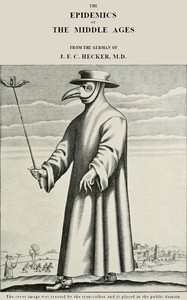
The Epidemics of the Middle Ages by J. F. C. Hecker and John Caius
Always visible content "The Epidemics of the Middle Ages" by J. F. C. Hecker is a historical account written in the mid-19th century. The book examines three significant epidemics—primarily the Black Death, alongside the Dancing Mania and Sweating Sickness—that ravaged Europe during the Middle Ages. Hecker attempts to illuminate the public health impacts and the societal reactions to these vast calamities, reflecting on the interplay between medical understanding and human behavior during these times. The Hidden checkbox to control the toggle Clickable label to show more The extra text that is initially hidden Clickable label to show less opening of the book sets the stage for a detailed exploration of the Black Death, one of the deadliest pandemics in history. Hecker begins by reflecting on the historical context of this epidemic, emphasizing the ignorance and superstition that clouded public perception of disease during the Middle Ages. The introductory sections describe the horrific symptoms of the plague, the widespread fear it engendered, and the inadequate responses by medical authorities. Hecker calls for a comprehensive historical study of epidemics as a means to better understand how society might combat similar crises in the future, thereby linking the lessons of the past to contemporary medical science and public health policy. (This is an automatically generated summary.)
A History of Epidemics in Britain, Volume 1 (of 2) by Charles Creighton
Always visible content “A History of Epidemics in Britain, Volume 1 (of 2)” by Charles Creighton is a historical account written in the late 19th century. The work explores the occurrence and impact of epidemics in Britain from A.D. 664 to the extinction of plague in 1665-1666, delving into various significant outbreaks and their socio-economic repercussions over the centuries. At the start of this volume, Creighton establishes the framework and timeline for discussing the historical Hidden checkbox to control the toggle Clickable label to show more The extra text that is initially hidden Clickable label to show less epidemics, beginning with the earliest recorded plague in 664, as noted in Beda's "Ecclesiastical History." He outlines the contextual implications of these outbreaks, particularly the connection between famine and sickness throughout medieval Britain, and how these factors intertwined with societal upheavals. He touches on the systematic approach he employed in compiling various historical sources and medical literature to create what he asserts is the first comprehensive epidemiological history focused on Great Britain and Ireland. This opening sets the stage for a detailed examination of how these epidemics shaped public health, social structures, and economic conditions over a lengthy period. (This is an automatically generated summary.)

The Life of Florence Nightingale, vol. 2 of 2 by Sir Edward Tyas Cook
Always visible content "The Life of Florence Nightingale, vol. 2 of 2" by Sir Edward Tyas Cook is a historical account written in the early 20th century. The book chronicles the life and impact of Florence Nightingale, focusing on her contributions to nursing and public health, particularly during the latter half of the 19th century. It details her tireless efforts in reforming military healthcare and nursing practices, as well as her influence on the British Hidden checkbox to control the toggle Clickable label to show more The extra text that is initially hidden Clickable label to show less Army's sanitation policies, particularly regarding the health of soldiers in India. At the start of the second volume, the narrative captures Nightingale's profound sense of loss following the tragedies of her close associates, Sidney Herbert and Arthur Hugh Clough. Despite her grief, she redirects her energy towards influential public health reforms, including the establishment of a Royal Commission focused on the health of the British Army in India. The text introduces themes of personal struggle and determination, emphasizing Nightingale's exceptional resilience and commitment to improving sanitary conditions for soldiers, reflecting both her pioneering spirit in nursing and her stature as a reformer in public health. (This is an automatically generated summary.)
Dictionary of Quotations from Ancient and Modern, English and Foreign Sources
Always visible content "Dictionary of Quotations from Ancient and Modern, English and Foreign Sources" by the Rev. James Wood is a collection of notable quotations compiled in the late 19th century. This comprehensive work includes phrases, maxims, proverbs, definitions, and aphorisms that pertain to various subjects, such as life, literature, science, and morality. The collection aims to provide readers with insight and wisdom gathered from a wide range of ancient and modern thought. At the Hidden checkbox to control the toggle Clickable label to show more The extra text that is initially hidden Clickable label to show less start of the text, the editor shares his purpose for creating this work, emphasizing the need for a more extensive compilation of quotations that addresses contemporary interests. He explains that while there are many excellent collections available, this one seeks to encompass a broader array of wisdom, especially from modern writings that reflect current societal concerns. The preface also outlines the book's organization, which is alphabetical rather than topical, and establishes the Editor's intention to present meaningful insights that are thought-provoking and relevant to the reader's life. (This is an automatically generated summary.)

Encyclopaedia Britannica, 11th Edition, "Bulgaria" to "Calgary" by Various
Always visible content "Encyclopaedia Britannica, 11th Edition, 'Bulgaria' to 'Calgary'" by Various is a comprehensive reference work written in the early 20th century. This volume serves as an encyclopedia entry that provides detailed information about various topics related to Bulgaria, including its geography, geology, flora, fauna, and socio-political history. The content reveals an extensive examination of Bulgaria’s natural landscapes, ecological details, and the country's progression through historical turmoil and national development. The opening of this Hidden checkbox to control the toggle Clickable label to show more The extra text that is initially hidden Clickable label to show less extensive reference outlines the geographical features of Bulgaria, emphasizing its mountainous terrain, with notable ranges such as the Balkans and Rhodope Mountains. It details various aspects such as climate, mineral wealth, and agricultural practices while illustrating the historical context of the region's geography. The text provides an insight into the natural resources and agricultural conditions, describing the socio-economic challenges faced by the country, and hints at agricultural inefficiencies stemming from a lack of modernization and the impacts of historical Turkish rule. This foundational information sets the stage for a deeper understanding of Bulgaria’s natural environment and its significant effects on cultural and economic factors that drive the nation. (This is an automatically generated summary.)
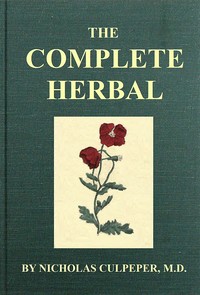
The Complete Herbal by Nicholas Culpeper
Always visible content "The Complete Herbal" by Nicholas Culpeper is a historical medicinal guide written in the mid-17th century. This work combines herbalism, astrology, and early medical practices, offering insights into the medicinal properties of various plants and their relationship with human ailments. It serves as both an extensive reference manual for herbal remedies and a treatise on the natural philosophy underpinning herbal medicine. At the start of the text, Culpeper introduces his work and Hidden checkbox to control the toggle Clickable label to show more The extra text that is initially hidden Clickable label to show less warns readers against relying on the numerous erroneous editions that have circulated prior to this version. He emphasizes the importance of understanding the reasons behind the properties of herbs, which traditional authors often fail to provide. Culpeper details his background in herbalism and astrology, asserting that real knowledge should be derived from reason and personal experience rather than outdated traditions. The opening sets up a systematic approach to understanding herbs and their uses, inviting readers to consider the connections between celestial influences and physical health. (This is an automatically generated summary.)