Religion_philosophy Books
Symposium by Plato
Always visible content "Symposium" by Plato is a Socratic dialogue written between 385-370 BC. At a banquet in ancient Athens, notable figures including Socrates, Alcibiades, and Aristophanes engage in a contest of speeches praising Eros, the god of love. Each man offers his perspective on love's nature and power—from inspiring battlefield courage to transcending earthly desire. Through conflicting ideas and shifting viewpoints, the dialogue explores love's deepest meanings while showcasing both philosophical depth and literary Hidden checkbox to control the toggle Clickable label to show more The extra text that is initially hidden Clickable label to show less artistry. (This is an automatically generated summary.)
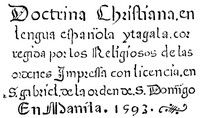
Doctrina Christiana by Edwin Wolf
Always visible content "Doctrina Christiana" by Edwin Wolf is a historical account written in the early 20th century. The text serves to illuminate the significance of this volume, recognized as the first book printed in the Philippines in 1593. The work sheds light on the printing methods used, the bibliographical history surrounding the book's creation, and the religious teachings contained within it, primarily focused on the fundamentals of Christianity as conveyed to the native population. Hidden checkbox to control the toggle Clickable label to show more The extra text that is initially hidden Clickable label to show less The opening of "Doctrina Christiana" discusses the arduous journey to locate this seminal work, engaging readers in a narrative that resembles a scholarly detective story. It outlines the book’s physical characteristics, including details about its contents, such as essential Christian prayers and teachings presented in both Spanish and Tagalog. Wolf introduces four main topics for investigation: the physical description, bibliographical history, authorship, and the printing methods employed, ensuring that readers not only appreciate the book's historical value but also its role in the cultural and religious education of the Filipinos during the Spanish colonization. (This is an automatically generated summary.)

韓詩外傳, Complete by active 150 B.C. Ying Han
Always visible content "韓詩外傳, Complete" by Han Ying is a collection of anecdotes written during the Western Han dynasty around 150 BCE. This work gathers some 300 stories and anecdotes carefully selected to illustrate and interpret poems from the ancient Book of Poetry. Drawing from the Han family's tradition of applying classical verses to specific situations, it offers interpretations that differed significantly from other scholarly schools of its time, preserving valuable insights into early Chinese Hidden checkbox to control the toggle Clickable label to show more The extra text that is initially hidden Clickable label to show less literary and philosophical thought. (This is an automatically generated summary.)
Meditations by Emperor of Rome Marcus Aurelius
Always visible content "Meditations" by Emperor of Rome Marcus Aurelius is a series of personal writings composed between 170-180 CE. Written in Greek as private notes to himself, this work captures the Roman Emperor's reflections on Stoic philosophy and self-improvement during military campaigns. Never intended for publication, these intimate musings explore finding one's place in the universe, maintaining ethical principles, and achieving inner harmony through reason. The twelve books reveal how one of history's most Hidden checkbox to control the toggle Clickable label to show more The extra text that is initially hidden Clickable label to show less powerful rulers sought to guide his own character and judgment. (This is an automatically generated summary.)
The Republic by Plato
Always visible content "The Republic" by Plato is a Socratic dialogue written around 375 BC. Through conversations between Socrates and various Athenians, the work explores the meaning of justice and whether the just person is happier than the unjust. Socrates examines existing forms of government and proposes an ideal city-state ruled by philosopher-kings. The dialogue ranges across profound questions: the nature of the soul, the role of poetry, love, aging, and the purpose of political Hidden checkbox to control the toggle Clickable label to show more The extra text that is initially hidden Clickable label to show less power itself. (This is an automatically generated summary.)

Beyond Good and Evil by Friedrich Wilhelm Nietzsche
Always visible content "Beyond Good and Evil" by Friedrich Wilhelm Nietzsche is a philosophical work published in 1886. Nietzsche launches a fierce attack on traditional philosophy, accusing past thinkers of disguising moral prejudices as objective truth. He challenges fundamental concepts like good versus evil, knowledge, and free will, proposing instead his theory of "will to power." The book calls for new philosophers who will move beyond conventional morality to embrace a more dangerous, perspectival understanding Hidden checkbox to control the toggle Clickable label to show more The extra text that is initially hidden Clickable label to show less of existence and create new values for the future. (This is an automatically generated summary.)
The Prince by Niccolò Machiavelli
Always visible content "The Prince" by Niccolò Machiavelli is a political treatise written in 1513 and published in 1532. Presented as an instruction guide for new rulers, this controversial work suggests that immoral acts may be necessary to achieve political power and glory. Written in vernacular Italian rather than Latin, it breaks from traditional advice literature by focusing on practical effectiveness over abstract ideals. Its worldview challenged dominant Catholic doctrines of the time, making "Machiavellian" Hidden checkbox to control the toggle Clickable label to show more The extra text that is initially hidden Clickable label to show less synonymous with political cunning and contributing to modern negative connotations of politics itself. (This is an automatically generated summary.)

Walden, and On The Duty Of Civil Disobedience by Henry David Thoreau
Always visible content "Walden, and On The Duty Of Civil Disobedience" by Henry David Thoreau is a philosophical essay and social critique written in the mid-19th century. This work reflects Thoreau's reflections on simple living in natural surroundings, drawing from his personal experiment of living alone in the woods near Walden Pond. Thoreau emphasizes themes of self-sufficiency, the critique of materialism, and the importance of individual conscience and civil disobedience in the face of unjust Hidden checkbox to control the toggle Clickable label to show more The extra text that is initially hidden Clickable label to show less laws. The opening of "Walden" begins with Thoreau recounting his two years of solitude in a self-built house by Walden Pond, where he lived simply and engaged in manual labor. He addresses the curiosity of his townsfolk about his lifestyle choices and presents his views on the societal pressures that guide people into lives of "quiet desperation." Through vivid imagery and philosophical musings, Thoreau discusses the burdens of inherited possessions and societal expectations, asserting that many people live unexamined lives. He calls for a re-evaluation of what is considered necessary for a fulfilling life, suggesting that true happiness derives from simplicity, individual thought, and an intimate connection with nature. (This is an automatically generated summary.)
Thus Spake Zarathustra: A Book for All and None by Friedrich Wilhelm Nietzsche
Always visible content "Thus Spake Zarathustra: A Book for All and None" by Friedrich Wilhelm Nietzsche is a work of philosophical fiction published between 1883 and 1885. Through the voice of the ancient prophet Zarathustra, Nietzsche delivers discourses on subjects ranging from the mundane to the metaphysical. The work introduces core Nietzschean concepts including the Übermensch, the death of God, the will to power, and eternal recurrence. Written in analogical and figurative language, it emerged Hidden checkbox to control the toggle Clickable label to show more The extra text that is initially hidden Clickable label to show less from decades of accumulated insight during solitary mountain walks. (This is an automatically generated summary.)