Religion_philosophy Books

Pascal's Pensées by Blaise Pascal
Always visible content **Pascal's Pensées** by Blaise Pascal is a collection of fragments written in the 17th century. Left incomplete at Pascal's death in 1662, these notes were intended as a defense of Christianity. The work introduces "Pascal's wager" and challenges both cosmological proofs of God and atheist critiques of faith. Pascal argues that God is hidden and found only through sincere seeking. Published posthumously in 1670, the fragments' intended order remains debated, inspiring numerous Hidden checkbox to control the toggle Clickable label to show more The extra text that is initially hidden Clickable label to show less editions and influencing thinkers from Heidegger to Sartre. (This is an automatically generated summary.)
The Egyptian Book of the dead by P. Le Page Renouf and Edouard Naville
Always visible content "The Egyptian Book of the Dead" by P. Le Page Renouf and Edouard Naville is a historical text and religious document compiled from various periods of ancient Egyptian civilization. Likely written from the Old to the Ptolemaic period, the work is a collection of spells, hymns, and prayers designed to guide the deceased through the afterlife, promising resurrection, eternal life, and the favor of the gods. The text reflects the Egyptians' profound Hidden checkbox to control the toggle Clickable label to show more The extra text that is initially hidden Clickable label to show less beliefs in the afterlife and the importance of proper rites to ensure safe passage and enjoyment of eternity for the departed. The opening of the text introduces transcriptions and notes, indicating careful preservation of the original hieroglyphs and commentary on textual variations. The initial chapters outline essential themes such as resurrection and entry into the afterworld, culminating in the supplication of deities like Osiris and Thoth for assistance in navigating the challenges of the Netherworld. Each chapter serves as a guide for the deceased, providing powerful invocations and affirmations that highlight their identity as Osiris or favored by the gods, thus underscoring the belief in transformation and communion with divine powers in life after death. (This is an automatically generated summary.)
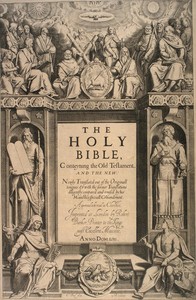
The King James Version of the Bible
Always visible content "The King James Version of the Bible" is an English translation of the Christian Bible commissioned in 1604 and published in 1611 under King James VI and I. This translation for the Church of England contains 80 books and was created to address controversies surrounding existing versions. Celebrated for its majestic style, it has profoundly shaped English literature, Christian thought, and everyday speech for over four centuries. The translation became the unchallenged Hidden checkbox to control the toggle Clickable label to show more The extra text that is initially hidden Clickable label to show less standard in English Protestant churches and remains one of the most widely read versions today. (This is an automatically generated summary.)
The lesser Key of Solomon, Goetia, the book of evil spirits : contains two…
Always visible content "The Lesser Key of Solomon, Goetia, the book of evil spirits: contains two…" is an anonymously authored grimoire compiled in the mid-17th century from older materials. This sorcery manual divides into five books, with the Ars Goetia cataloging seventy-two demons summoned through ritual magic. Drawing from Renaissance occult sources, the text details spirits, seals, and invocations for controlling supernatural entities. The work bridges medieval demonology and ceremonial magic, offering practitioners detailed instructions Hidden checkbox to control the toggle Clickable label to show more The extra text that is initially hidden Clickable label to show less for summoning and commanding evil spirits through elaborate rituals and protective measures. (This is an automatically generated summary.)
The Confessions of St. Augustine by Saint of Hippo Augustine
Always visible content "The Confessions of St. Augustine" by Bishop of Hippo Saint Augustine is an autobiographical work written between AD 397 and 400. In thirteen books composed as prayers to God, Augustine recounts his turbulent journey from a sinful youth to Christian conversion. He reflects on his immoral past, his time following Manichaeism, and the influential figures who guided him toward faith. Considered the first Western autobiography, this intimate spiritual memoir explores themes of Hidden checkbox to control the toggle Clickable label to show more The extra text that is initially hidden Clickable label to show less sin, redemption, and humanity's restless search for divine truth. (This is an automatically generated summary.)
The City of God, Volume I by Saint of Hippo Augustine
Always visible content "The City of God, Volume I" by Bishop of Hippo Saint Augustine is a work of Christian philosophy written in Latin in the early 5th century AD. Composed in response to Rome's sack by the Visigoths in 410, Augustine defends Christianity against accusations that it caused Rome's decline. He presents human history as a conflict between the Earthly City—those pursuing worldly pleasures—and the City of God—those dedicated to eternal truths. Through theological Hidden checkbox to control the toggle Clickable label to show more The extra text that is initially hidden Clickable label to show less argument and historical analysis, Augustine refutes pagan religion and philosophy while expounding on suffering, evil, free will, and original sin. (This is an automatically generated summary.)