Religion_philosophy Books
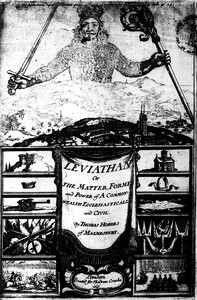
Leviathan by Thomas Hobbes
Always visible content "Leviathan" by Thomas Hobbes is a philosophical treatise published in 1651. Written during the English Civil War, it explores the structure of society and legitimate government through social contract theory. Hobbes argues that humanity's natural state is a brutal "war of all against all," driven by individual appetites and the fear of violent death. Only a strong, absolute sovereign can prevent civil war and chaos by uniting both secular and spiritual power. Hidden checkbox to control the toggle Clickable label to show more The extra text that is initially hidden Clickable label to show less This influential work presents a materialistic view of human nature and political order. (This is an automatically generated summary.)
Roman Stoicism by Edward Vernon Arnold
Always visible content "Roman Stoicism" by Edward Vernon Arnold is a scholarly examination of Stoic philosophy, particularly its development within the Roman Empire, written in the early 20th century. The text offers a thorough exploration of Stoicism's historical significance, philosophical doctrines, and its influence on later thought and religions. By framing Stoicism as a vital link between ancient and modern philosophies, Arnold emphasizes its relevance to contemporary discussions of morality and governance. The opening of Hidden checkbox to control the toggle Clickable label to show more The extra text that is initially hidden Clickable label to show less the work outlines the foundational premises of Stoicism and situates it within the broader context of world religions. Arnold begins by explaining how Roman literature reflects deep philosophical inquiries characteristic of the Stoics, particularly concerning fate, morality, and the nature of the divine. He highlights the importance of understanding the interplay between these philosophical questions and the socio-political landscape of the Roman world. The author sets the stage for a detailed exploration of the Stoic philosophy's evolution, its interaction with other religious and philosophical traditions like Judaism and Christianity, and its enduring legacy in Western thought. (This is an automatically generated summary.)
A Short History of Freethought Ancient and Modern, Volume 2 of 2 by J. M. Robertson
Always visible content "A Short History of Freethought Ancient and Modern, Volume 2 of 2" by J. M. Robertson is a historical account written in the early 20th century. The book explores the evolution of freethought through various significant periods and events, particularly focusing on England, Germany, France, and other European contexts from the Reformation through to the 19th century. This volume highlights the struggles, persecution, and intellectual developments surrounding the rise of rationalism and Hidden checkbox to control the toggle Clickable label to show more The extra text that is initially hidden Clickable label to show less secular thought in the face of prevailing religious dogmas. The opening portion of the work discusses the transition to modern freethought in England during a turbulent historical period that included the reigns of Henry VIII, Mary, and Elizabeth. It highlights the harsh penalties faced by those expressing heterodox beliefs, such as Anabaptists and Unitarians, emphasizing the severity of religious persecution. Additionally, the text documents various notable freethinkers from this era, their philosophical explorations, and the cultural conditions that fostered skepticism, as well as the tensions between belief and criticism within the literary and scientific communities of the time. This early discussion sets the stage for a broader examination of the development of freethought and rationalism across Europe in subsequent chapters. (This is an automatically generated summary.)
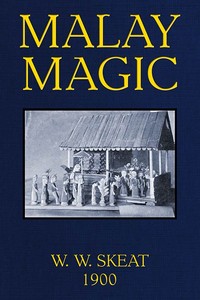
Malay Magic by Walter William Skeat
Always visible content "Malay Magic" by Walter William Skeat is an introductory work on folklore and popular religion written in the late 19th century. It explores the rich tapestry of beliefs, customs, and magical practices of the Malays in the Malay Peninsula, drawing upon a variety of sources, including personal observations, native manuscripts, and published works. The book aims to document and analyze the traditional beliefs and practices that are integral to Malay culture, highlighting Hidden checkbox to control the toggle Clickable label to show more The extra text that is initially hidden Clickable label to show less the complexity of their folklore intertwined with influences from Indian, Arab, and indigenous sources. The opening of the book sets the stage for a comprehensive exploration of Malay folklore, establishing the author's intent to create a representative account of Malay beliefs and magical practices. Skeat introduces the key themes such as creation myths, the understanding of nature, and the relationships between humans and the supernatural world. He reflects on the significance of various folkloric beliefs, such as the creation of the world and the role of magic in everyday life, and emphasizes the importance of these elements in understanding the Malay identity and culture. As he begins to unfold these narratives, the reader is invited into the intricate world of Malay magic, laying the foundation for the detailed studies that follow. (This is an automatically generated summary.)
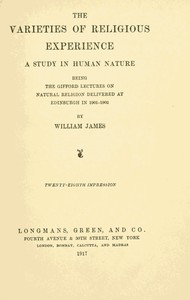
The Varieties of Religious Experience: A Study in Human Nature by William James
Always visible content "The Varieties of Religious Experience: A Study in Human Nature" by William James is a book published in 1902, based on lectures delivered at the University of Edinburgh. This pioneering work in psychology explores individual religious experiences and mysticism across different traditions, examining what James calls "healthy-minded" and "sick soul" religion. Drawing on extensive personal testimonies, James identifies common markers of mystical experience while arguing pragmatically for religion's value through its transformative Hidden checkbox to control the toggle Clickable label to show more The extra text that is initially hidden Clickable label to show less effects on individuals, regardless of theological truth claims. (This is an automatically generated summary.)
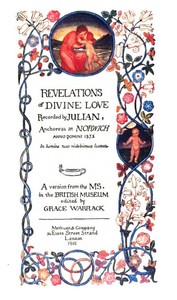
Revelations of Divine Love by of Norwich Julian
Always visible content "Revelations of Divine Love" by Julian of Norwich is a medieval work of Christian mystical devotion written between the 14th and 15th centuries. The earliest surviving book in English known to be written by a woman, it recounts sixteen visions Julian received during a near-death illness in 1373. After recovering, she became an anchoress and spent decades developing her insights into two versions: the Short Text and Long Text. Her mystical experience Hidden checkbox to control the toggle Clickable label to show more The extra text that is initially hidden Clickable label to show less and theological reflections have captivated readers for centuries. (This is an automatically generated summary.)

The Jewish State by Theodor Herzl
Always visible content "The Jewish State" by Theodor Herzl is a pamphlet published in February 1896. Considered one of the most important texts of modern Zionism, it argues that the best solution to European antisemitism is establishing an independent Jewish state. Herzl examines centuries of persecution that forced Jews into ghettos and proposes two possible regions for settlement—Argentina and Palestine. He envisions a systematic colonization supported by international powers, advocating for sovereign rights rather than Hidden checkbox to control the toggle Clickable label to show more The extra text that is initially hidden Clickable label to show less gradual migration. The work popularized the term "Zionism" and profoundly influenced the movement that led to Israel's creation in 1948. (This is an automatically generated summary.)

The Bible, Douay-Rheims, Complete
Always visible content "The Bible, Douay-Rheims, Complete" is an English translation of the Bible published between 1582 and 1610. Created by English Catholic scholars in exile during the Reformation, this translation rendered the Latin Vulgate into Early Modern English as a Counter-Reformation effort. The New Testament appeared in Rheims in 1582, while the Old Testament followed in Douai nearly three decades later. Later revised by Bishop Richard Challoner in the mid-1700s, this translation influenced the Hidden checkbox to control the toggle Clickable label to show more The extra text that is initially hidden Clickable label to show less King James Version and remains significant for traditional English-speaking Catholics today. (This is an automatically generated summary.)

日知錄 by Yanwu Gu
Always visible content "日知錄" by Yanwu Gu is a philosophical and historical treatise likely written in the mid-17th century. The work appears to encompass Confucian ideas and reflections on historical texts, notably concerning the intricacies of the I Ching, a classic Chinese divination text. The author engages with various historical documents and classic philosophies, aiming to elucidate moral and ethical conduct in governance and society, while also examining traditional doctrines. At the start of the Hidden checkbox to control the toggle Clickable label to show more The extra text that is initially hidden Clickable label to show less text, the author reflects on their own experiences with study and the importance of documenting insights gained over thirty years. It sets a scholarly tone, indicating a dedication to correcting misunderstandings about classic texts, specifically the I Ching, as well as addressing the influence of various interpretations by past scholars. The opening explores intricate ideas about the origins and meanings behind passages of the I Ching, delving into topics such as the nature of change, the significance of moral virtues, and the historical context of the text, showcasing Yanwu Gu's effort to clarify philosophical concepts for future generations. (This is an automatically generated summary.)