Featured Books

United States Steel: A Corporation with a Soul by Arundel Cotter
Always visible content "United States Steel: A Corporation with a Soul" by Arundel Cotter is a historical account written in the early 20th century, specifically 1921. The work explores the foundational story of the United States Steel Corporation, emphasizing the interplay between corporate development and the broader context of the steel industry in America. Through the narrative, Cotter suggests that behind the formidable corporate structure lies a sense of ethics and responsibility, advocating for a Hidden checkbox to control the toggle Clickable label to show more The extra text that is initially hidden Clickable label to show less perception of the corporation not merely as a business entity but as an institution with moral obligations towards its employees and society. The opening of the book establishes a clear framework for understanding the significance of the United States Steel Corporation within the larger narrative of American industrialization. It introduces Elbert H. Gary, the chairman and chief executive officer, whose vision and leadership are depicted as instrumental in shaping the corporation’s ethos. The prologue suggests that the corporation, which dwarfed its competitors in size and influence, also sought to redefine corporate responsibility by promoting fair competition and transparency in business practices. This veritable blend of corporate ambition and social consciousness lays the groundwork for the detailed history that follows, tracing the evolution of the steel industry's practices and its prominent figures, foreshadowing the in-depth examination of events leading to the establishment of this industrial giant. (This is an automatically generated summary.)

Mr. Honey's Large Business Dictionary (German-English) by Winfried Honig
Always visible content "Mr. Honey's Large Business Dictionary (German-English)" by Winfried Honig is a bilingual reference work likely written in the early 21st century. This comprehensive dictionary focuses on business-related phrases and terminologies commonly used in both English and German, serving as a valuable resource for students and professionals alike who wish to navigate the language of business in an international context. The opening of the dictionary outlines its purpose as a tool to aid Hidden checkbox to control the toggle Clickable label to show more The extra text that is initially hidden Clickable label to show less English and German speakers in understanding and using business terminology effectively. Winfried Honig's background as an educator and his involvement with projects aimed at teaching business English are highlighted, providing insight into his motivation for creating this extensive work. Additionally, the introduction explains the history behind the dictionary's development, including its digitization efforts and contributions to online platforms to further support language learners in professional environments. (This is an automatically generated summary.)
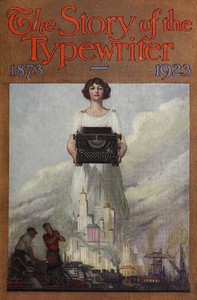
The Story of the Typewriter, 1873-1923 by Herkimer County Historical Society
Always visible content "The Story of the Typewriter, 1873-1923" by the Herkimer County Historical Society is a historical account published early in the 20th century. This work commemorates the invention and evolution of the typewriter over a fifty-year period, highlighting its significant role in transforming communication and business practices. The book explores the typewriter's impact on society, particularly its contribution to the economic emancipation of women and the overall progression of modern life. The opening Hidden checkbox to control the toggle Clickable label to show more The extra text that is initially hidden Clickable label to show less of the book introduces the historical context of the typewriter's invention, beginning with its roots in the little Mohawk Valley village of Ilion, New York. The text discusses the gradual realization of a need for a writing machine and outlines the early attempts at creating such devices, beginning from the 18th century with Henry Mill's patent, to the pivotal moment when Christopher Latham Sholes and his colleagues developed the first practical typewriter in the late 1860s. The narrative sets the stage for a comprehensive exploration of the typewriter's technological advancements, societal impacts, and the key figures involved in its development, ultimately laying the groundwork for understanding how this groundbreaking invention revolutionized communication. (This is an automatically generated summary.)

My Life and Work by Henry Ford and Samuel Crowther
Always visible content "My Life and Work" by Henry Ford is a historical account written in the early 20th century. The text provides insights into Ford's life, his philosophical approaches to business, manufacturing, and the transformative impact of the automobile on society. It serves as a reflection on his experiences and the principles that guided the operations of Ford Motor Company. The opening of the work introduces the reader to Ford’s foundational beliefs regarding work Hidden checkbox to control the toggle Clickable label to show more The extra text that is initially hidden Clickable label to show less and service as central to a successful life and business. He emphasizes the value of hard work and intelligent planning, critiquing the then-prevailing attitudes towards finance and profit-driven approaches that neglected genuine customer satisfaction. Ford recounts his early fascination with machinery and mechanics, sharing anecdotes from his childhood and early career that led to the development of his automobiles. This segment highlights his desire to innovate and improve production processes, setting the stage for his later successes in the automotive industry. (This is an automatically generated summary.)

Up To Date Business by Seymour Eaton
Always visible content "Up To Date Business" by Seymour Eaton is a comprehensive study guide written in the late 19th century. This educational text covers various aspects of business practices, including banking, finance, geography, transportation, and commercial law, likely intended for students or individuals keen to gain practical knowledge in these fields. The opening of the work introduces its different sections and topics, starting with general business information. It outlines commercial terms, such as the Hidden checkbox to control the toggle Clickable label to show more The extra text that is initially hidden Clickable label to show less distinction between commerce and business, and explains essential financial instruments like bank cheques and promissory notes. Eaton emphasizes the importance of understanding commercial language and practices in conducting business effectively, detailing the intricacies of transactions and financial documentation, which set the stage for readers to gain a solid foundation in business operations. (This is an automatically generated summary.)

Business English: A Practice Book by Rose Buhlig
"Business English: A Practice Book" by Rose Buhlig is a practical educational resource aimed at teaching effective communication skills in a business context, written in the early 20th century. This book focuses on both oral and written language, emphasizing the application of literary principles to business communication. Readers can expect to gain insights into the essentials of grammar, composition, and business writing techniques necessary for successful interactions within commercial settings. The opening portion of the book introduces the concept of Business English, asserting that it encompasses more than just letter writing. Buhlig emphasizes the importance of oral communication in various business interactions, from sales pitches to customer service. The text also stresses the value of effective written correspondence, highlighting the challenges posed by correct grammar, punctuation, and clarity in written discourse. It sets the stage for a structured study of language elements, beginning with a focus on word usage, pronunciation, and grammatical principles applicable to both spoken and written English in the business environment.

Railroad Reorganization by Stuart Daggett
"Railroad Reorganization" by Stuart Daggett is a historical account written in the early 20th century. The work focuses on the intricacies and challenges surrounding the reorganization of various American railroads during a tumultuous period in the late 19th century. Specifically, it examines the financial difficulties that led to receivership and the subsequent restructuring efforts of major railroad companies. At the start of the text, Daggett provides a backdrop detailing the significant number of railroads that fell into receivership between 1893 and 1899, alongside their staggering capitalizations. He outlines the causes resulting in these financial troubles, highlighting the struggles faced by road owners, bondholders, and the legal system. By examining the Baltimore & Ohio and other major railroads, Daggett sets the stage for a thorough exploration of their reorganization processes, potential solutions, and the broader implications these experiences had on the practices and regulations of corporate finance within the industry.
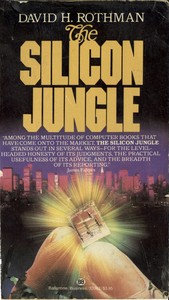
The Silicon Jungle by David H. Rothman
Always visible content "The Silicon Jungle" by David H. Rothman is an insightful guidebook on personal computing written in the mid-1980s. The book explores the evolving landscape of the computer revolution, emphasizing how technology impacts both individuals and businesses. It addresses critical issues such as computer security, productivity, and the competitive nature of the tech industry, offering practical advice for navigating this complex terrain. At the start of the book, Rothman sets the stage for Hidden checkbox to control the toggle Clickable label to show more The extra text that is initially hidden Clickable label to show less his exploration of the personal computer scene by describing the intense and often cutthroat competition that characterizes the industry. He illustrates this with examples of various businesses and individuals using technology—ranging from car thieves and journalists to lawyers—to gain an edge over their rivals. The opening portion introduces the concept of the "Silicon Jungle," emphasizing the need for strategic use of computers in everyday business operations and foreshadowing the more detailed analyses and case studies that will follow throughout the book. Rothman aims to empower his readers with knowledge and insights that will help them successfully navigate this technological landscape. (This is an automatically generated summary.)

Financial Crime and Corruption by Samuel Vaknin
Always visible content "Financial Crime and Corruption" by Samuel Vaknin is a comprehensive examination of global financial misconduct, including corruption, embezzlement, and money laundering, written in the early 21st century. The text serves as an analytical and educational account aimed at understanding the mechanisms and implications of corrupt practices in both political and economic contexts. It delves into various case studies and theories regarding financial crime, illustrating the pervasive nature of these issues across different Hidden checkbox to control the toggle Clickable label to show more The extra text that is initially hidden Clickable label to show less countries and systems. The opening of the book discusses the concept of slush funds, providing historical examples that showcase their misuse in both government and corporate environments. It highlights incidents like the FBI's Operation Swordfish and the corrupt practices of several politicians and organizations, emphasizing the detrimental effects of slush funds on public trust and governance. By setting the stage with concrete examples and precedents, Vaknin provides readers with a foundational understanding of how financial misconduct unfolds and proliferates within institutional frameworks, foreshadowing the broader discussions that will follow throughout the work. (This is an automatically generated summary.)