Featured Books

The Adventures of Ferdinand Count Fathom — Complete by T. Smollett
Always visible content "The Adventures of Ferdinand Count Fathom" by Tobias Smollett is a satirical novel written in the mid-18th century. The narrative follows the cunning and morally ambiguous character of Ferdinand Count Fathom, a man of mysterious parentage armed with an extraordinary talent for deception and manipulation. The story sets the stage for themes of vice and virtue, exploring Fathom’s escapades and schemes as he navigates a world ripe for exploitation. The opening of Hidden checkbox to control the toggle Clickable label to show more The extra text that is initially hidden Clickable label to show less the novel introduces Fathom in an unusual light—born under strange circumstances to a mother who flitted between roles in military encampments and armies. We explore the early influence of his mother, an adventurous and fierce figure whose exploits paint a picture of a wild and unrestrained environment. As Fathom grows, he exhibits a blend of charisma and villainy, drawing the attention of powerful patrons while developing ambitions of his own. With a sharp wit and an ability to adapt, he becomes both an object of admiration and contempt, preparing the reader for a complex journey through deceit, ambition, and the nature of morality. (This is an automatically generated summary.)
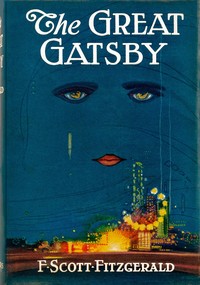
The Great Gatsby by F. Scott Fitzgerald
Always visible content "The Great Gatsby" by F. Scott Fitzgerald is a novel published in 1925. Set in the Jazz Age on Long Island, it follows narrator Nick Carraway as he becomes drawn into the world of his mysterious neighbor, Jay Gatsby, a wealthy millionaire who throws extravagant parties. Gatsby harbors an obsession with reuniting with Daisy Buchanan, a woman from his past now married to the affluent Tom. The story captures the glamour, excess, Hidden checkbox to control the toggle Clickable label to show more The extra text that is initially hidden Clickable label to show less and moral complexities of 1920s America. (This is an automatically generated summary.)
Cranford by Elizabeth Cleghorn Gaskell
Always visible content "Cranford" by Elizabeth Cleghorn Gaskell is an episodic novel published in 1853. Set in a small English country town, the work affectionately portrays a society of elderly women navigating genteel poverty and rigid social codes in a world slowly changing around them. Through the eyes of visitor Mary Smith, readers encounter the "Amazons" of Cranford—widows and spinsters maintaining appearances through "elegant economy" while resisting the industrial age creeping beyond their boundaries. This Hidden checkbox to control the toggle Clickable label to show more The extra text that is initially hidden Clickable label to show less gentle chronicle explores class, tradition, and the gradual shift from rank-based society toward human kindness. (This is an automatically generated summary.)

The Enchanted April by Elizabeth Von Arnim
Always visible content "The Enchanted April" by Elizabeth von Arnim is a novel published in 1922. Four dissimilar women escape their dreary lives in 1920s England for a month-long holiday at a medieval Italian castle. Mrs. Arbuthnot and Mrs. Wilkins struggle with unhappy marriages, Lady Caroline seeks refuge from shallow London society, and elderly Mrs. Fisher clings to her Victorian past. Despite initial tensions, the tranquil Mediterranean setting begins to work its magic on each Hidden checkbox to control the toggle Clickable label to show more The extra text that is initially hidden Clickable label to show less woman, offering possibilities for transformation and renewal. (This is an automatically generated summary.)
Jane Eyre: An Autobiography by Charlotte Brontë
Always visible content "Jane Eyre: An Autobiography" by Charlotte Brontë is a novel published in 1847. It follows the life of Jane Eyre from her oppressed childhood through her education and into adulthood, where she becomes governess at Thornfield Hall and falls in love with the mysterious Mr. Rochester. Told through intimate first-person narrative, this groundbreaking bildungsroman explores moral and spiritual development while addressing class, religion, sexuality, and feminism. The story unfolds across five distinct Hidden checkbox to control the toggle Clickable label to show more The extra text that is initially hidden Clickable label to show less stages, each shaping Jane's journey toward independence and belonging. (This is an automatically generated summary.)
Wuthering Heights by Emily Brontë
Always visible content "Wuthering Heights" by Emily Brontë is a novel published in 1847. Set on the Yorkshire moors, it follows two landowning families and their turbulent relationships with Heathcliff, a mysterious foster son. Driven by obsessive love, possession, and revenge that spans generations, the story unfolds through dark passion and cruelty. This Gothic tale challenged Victorian morality with its depictions of abuse and class conflict, ultimately becoming a cornerstone of English literature despite its Hidden checkbox to control the toggle Clickable label to show more The extra text that is initially hidden Clickable label to show less initially polarized reception. (This is an automatically generated summary.)
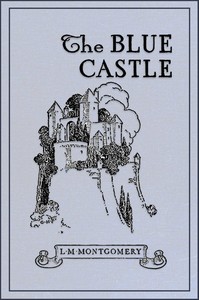
The Blue Castle: a novel by L. M. Montgomery
Always visible content "The Blue Castle: a novel by L. M. Montgomery" is a novel published in 1926. Twenty-nine-year-old Valancy Stirling has spent her entire life suffocated by her controlling family's expectations. When she receives a shocking medical diagnosis, she decides to finally break free and live on her own terms. She scandalizes her relatives by speaking her mind, moving out, and eventually proposing marriage to the mysterious and supposedly disreputable Barney Snaith. Together they Hidden checkbox to control the toggle Clickable label to show more The extra text that is initially hidden Clickable label to show less build a new life on a remote island—but secrets still linger. (This is an automatically generated summary.)

Crime and Punishment by Fyodor Dostoyevsky
Always visible content "Crime and Punishment" by Fyodor Dostoevsky is a novel published in 1866. It follows Rodion Raskolnikov, an impoverished former law student in Saint Petersburg who plans to murder an unscrupulous pawnbroker. He convinces himself that certain crimes are justifiable if committed by "extraordinary" men pursuing higher goals. Once the deed is done, however, he is consumed by confusion, paranoia, and guilt as his theoretical justifications crumble and he faces the internal and Hidden checkbox to control the toggle Clickable label to show more The extra text that is initially hidden Clickable label to show less external consequences of his actions. (This is an automatically generated summary.)

Beowulf: An Anglo-Saxon Epic Poem by J. Lesslie Hall
Always visible content "Beowulf: An Anglo-Saxon Epic Poem" by J. Lesslie Hall is an epic poem written in the late 19th century. The narrative focuses on the heroic figure Beowulf, a warrior from Geatland, who seeks to help Hrothgar, the Danish king, rid his land of the monstrous creature Grendel that has been terrorizing his mead-hall. This tale weaves themes of heroism, loyalty, and the struggle between good and evil, set against the backdrop of Hidden checkbox to control the toggle Clickable label to show more The extra text that is initially hidden Clickable label to show less the early medieval period. The opening of the poem introduces the legacy of Scyld, the founding king of the Danes, and his great lineage, leading up to Hrothgar's reign. After building Heorot, a grand mead-hall, Hrothgar faces despair as Grendel attacks nightly, slaughtering his warriors. Word of Hrothgar's plight reaches Beowulf, who decides to journey to the Danes with a band of fourteen warriors to confront Grendel. The scene is set for a monumental clash between the might of Beowulf and the terror of Grendel, emphasizing the values of strength, courage, and honor that define the epic tradition. (This is an automatically generated summary.)