Featured Books

The Prince by Niccolò Machiavelli
Always visible content "The Prince" by Niccolò Machiavelli is a political treatise written in 1513 and published in 1532. Presented as an instruction guide for new rulers, this controversial work suggests that immoral acts may be necessary to achieve political power and glory. Written in vernacular Italian rather than Latin, it breaks from traditional advice literature by focusing on practical effectiveness over abstract ideals. Its worldview challenged dominant Catholic doctrines of the time, making "Machiavellian" Hidden checkbox to control the toggle Clickable label to show more The extra text that is initially hidden Clickable label to show less synonymous with political cunning and contributing to modern negative connotations of politics itself. (This is an automatically generated summary.)

Walden, and On The Duty Of Civil Disobedience by Henry David Thoreau
Always visible content "Walden, and On The Duty Of Civil Disobedience" by Henry David Thoreau is a philosophical essay and social critique written in the mid-19th century. This work reflects Thoreau's reflections on simple living in natural surroundings, drawing from his personal experiment of living alone in the woods near Walden Pond. Thoreau emphasizes themes of self-sufficiency, the critique of materialism, and the importance of individual conscience and civil disobedience in the face of unjust Hidden checkbox to control the toggle Clickable label to show more The extra text that is initially hidden Clickable label to show less laws. The opening of "Walden" begins with Thoreau recounting his two years of solitude in a self-built house by Walden Pond, where he lived simply and engaged in manual labor. He addresses the curiosity of his townsfolk about his lifestyle choices and presents his views on the societal pressures that guide people into lives of "quiet desperation." Through vivid imagery and philosophical musings, Thoreau discusses the burdens of inherited possessions and societal expectations, asserting that many people live unexamined lives. He calls for a re-evaluation of what is considered necessary for a fulfilling life, suggesting that true happiness derives from simplicity, individual thought, and an intimate connection with nature. (This is an automatically generated summary.)
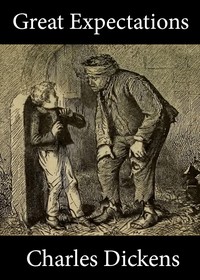
Great Expectations by Charles Dickens
Always visible content "Great Expectations" by Charles Dickens is a novel first published serially from 1860 to 1861. The story follows Pip, a young orphan living with his sister and her blacksmith husband on England's coastal marshes. After a terrifying encounter with an escaped convict and strange visits to the bitter Miss Havisham and her cold adopted daughter Estella, Pip's life transforms when he mysteriously receives a fortune from an unknown benefactor. This bildungsroman explores Hidden checkbox to control the toggle Clickable label to show more The extra text that is initially hidden Clickable label to show less wealth and poverty, love and rejection, through vivid characters and dramatic scenes that have captivated readers for generations. (This is an automatically generated summary.)

The Black Hawk War Including a Review of Black Hawk's Life by Frank Everett Stevens
Always visible content "The Black Hawk War Including a Review of Black Hawk's Life" by Frank Everett Stevens is a historical account written in the early 20th century. The work delves into the life of Black Hawk, a prominent Native American leader, and the conflict known as the Black Hawk War, providing detailed insights into the tensions between Native Americans and American settlers during this tumultuous period. The opening of the book introduces the author’s Hidden checkbox to control the toggle Clickable label to show more The extra text that is initially hidden Clickable label to show less dedication to his mother, emphasizing the work as a labor of love. Stevens begins the narrative by outlining his extensive research on Black Hawk, revealing the challenges he faced in gathering materials, including interviews with eyewitnesses and original documents. He sets the stage for an in-depth examination of Black Hawk's early life, personality traits, and the escalations that led to conflict, particularly detailing events surrounding treaties that shaped relations between Black Hawk's tribe and the United States. This foundational chapter establishes the complexity of Black Hawk's character and the context for understanding the subsequent chapters that delve into the detailed accounts of the war and its implications on Native American culture and society. (This is an automatically generated summary.)

White nights, and other stories by Fyodor Dostoyevsky
Always visible content "White Nights and Other Stories" by Fyodor Dostoyevsky is a collection of short stories written in the mid-19th century. The title story, "White Nights," revolves around an unnamed narrator who leads a solitary life in St. Petersburg and unexpectedly finds connection with a mysterious young woman named Nastenka. The collection explores themes of loneliness, longing, and the complexities of human relationships through the lens of Dostoyevsky's profound psychological insight. At the start Hidden checkbox to control the toggle Clickable label to show more The extra text that is initially hidden Clickable label to show less of "White Nights," the narrator describes his feelings of desolation as he wanders through St. Petersburg, reflecting on his profound loneliness as the city empties out for the summer. He encounters Nastenka, who is weeping at the canal, and in their interaction, a delicate bond begins to form. The narrator, filled with shyness, provides her a sense of safety in the face of an unwanted advance from a drunken gentleman. Their conversation reveals much about their longing for connection and inner turmoil, setting the stage for a passionate, albeit complex, relationship marked by unspoken emotions and dreams intertwined with reality. As the night unfolds, the narrator's infatuation with Nastenka deepens, but her heart seems already tethered to someone else, creating a poignant tension that is typical of Dostoyevsky's compelling storytelling. (This is an automatically generated summary.)

The Iliad by Homer
Always visible content "The Iliad" by Homer is an ancient Greek epic poem composed around the late 8th or early 7th century BC. Set during the final weeks of the ten-year Trojan War, it follows the devastating anger of Achilles, the greatest Greek warrior, sparked by a bitter quarrel with King Agamemnon. As pride and wrath collide, the conflict escalates from personal dispute to battlefield tragedy, culminating in the death of Troy's champion, Hector. Gods Hidden checkbox to control the toggle Clickable label to show more The extra text that is initially hidden Clickable label to show less intervene, heroes clash, and the fate of nations hangs in the balance. (This is an automatically generated summary.)

The Yellow Wallpaper by Charlotte Perkins Gilman
Always visible content "The Yellow Wallpaper" by Charlotte Perkins Gilman is a short story published in January 1892. This landmark work of feminist literature and horror fiction follows a woman confined to a nursery by her physician husband as treatment for "temporary nervous depression." Forbidden from working or writing, she documents her experience through secret journal entries. With nothing to occupy her mind but the room's disturbing yellow wallpaper, she descends into madness, becoming obsessed Hidden checkbox to control the toggle Clickable label to show more The extra text that is initially hidden Clickable label to show less with its strange patterns and the figures she perceives within it. (This is an automatically generated summary.)

Thus Spake Zarathustra: A Book for All and None by Friedrich Wilhelm Nietzsche
Always visible content "Thus Spake Zarathustra: A Book for All and None" by Friedrich Wilhelm Nietzsche is a work of philosophical fiction published between 1883 and 1885. Through the voice of the ancient prophet Zarathustra, Nietzsche delivers discourses on subjects ranging from the mundane to the metaphysical. The work introduces core Nietzschean concepts including the Übermensch, the death of God, the will to power, and eternal recurrence. Written in analogical and figurative language, it emerged Hidden checkbox to control the toggle Clickable label to show more The extra text that is initially hidden Clickable label to show less from decades of accumulated insight during solitary mountain walks. (This is an automatically generated summary.)
The Adventures of Sherlock Holmes by Arthur Conan Doyle
Always visible content "The Adventures of Sherlock Holmes" by Arthur Conan Doyle is a collection of short stories first published in 1892. These twelve tales feature the legendary consulting detective Sherlock Holmes and his companion Dr. Watson, narrated from Watson's perspective. Each mystery explores social injustices while showcasing Holmes's brilliant deductive methods and unconventional approach to justice. The stories introduce memorable characters and cases that have captivated readers for over a century, establishing Holmes as Hidden checkbox to control the toggle Clickable label to show more The extra text that is initially hidden Clickable label to show less one of literature's most enduring detectives. (This is an automatically generated summary.)