Featured Books
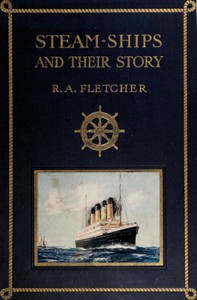
Steam-ships : The story of their development to the present day by R. A. Fletcher
Always visible content "Steam-ships: The Story of Their Development to the Present Day" by R. A. Fletcher is a historical account written in the early 20th century. The book explores the evolution of steam-powered ships and focuses on the innovations that propelled their development over the last century. The author examines the significance of steam-ships in broader historical contexts, particularly their impact on trade and transportation, emphasizing the transition from sailing ships to steam-powered vessels. Hidden checkbox to control the toggle Clickable label to show more The extra text that is initially hidden Clickable label to show less The opening of the work provides a thorough introduction to the history of steam-ships, detailing early mechanical propulsion attempts and the gradual move from sail to steam. Fletcher discusses primitive designs, such as paddle-wheels, and highlights significant individuals and inventions that marked the progress of steam navigation, including notable figures like Robert Fulton and John Fitch, as well as key innovations like the use of screw propellers. Through this exploration, the author sets the stage for a detailed examination of the technological advancements and pivotal moments that shaped steam navigation, revealing the intertwined histories of engineering, commerce, and maritime travel. (This is an automatically generated summary.)

The Evolution of Naval Armament by Frederick Leslie Robertson
Always visible content "The Evolution of Naval Armament" by Frederick Leslie Robertson is a historical account written in the early 20th century. The book delves into the significant advancements in naval technology and armaments, particularly during the 19th century, covering the evolution of ships, guns, and propulsion systems. Robertson, an engineer commander in the Royal Navy, aims to bridge the gap in popular literature concerning naval history, providing insights into the technical aspects and material Hidden checkbox to control the toggle Clickable label to show more The extra text that is initially hidden Clickable label to show less developments that shaped modern naval forces. At the start of the work, the author introduces the theme of naval architecture and the evolution of warships, focusing on the limitations of earlier designs, primarily the sailing ship and its inability to match the maneuverability of oar-driven galleys before the 14th century. He discusses the gradual advancements leading to the incorporation of artillery, driven by innovations like gunpowder and the mariner's compass, which together transformed naval warfare. Robertson emphasizes the historical challenges faced in ship design and construction, highlighting the interplay between naval technology and warfare strategies throughout different eras. (This is an automatically generated summary.)
Waterways and Water Transport in Different Countries by J. Stephen Jeans
Always visible content "Waterways and Water Transport in Different Countries" by J. Stephen Jeans is a historical account written in the late 19th century. This comprehensive work explores the subject of water transport, particularly focusing on artificial waterways like canals. The author addresses the importance of adequate transport facilities to a nation's economic well-being and provides a detailed examination of various canal systems around the world, including well-known projects like the Panama and Suez Canals. Hidden checkbox to control the toggle Clickable label to show more The extra text that is initially hidden Clickable label to show less At the start of the work, the author sets the stage for a discussion on the critical role that effective transportation plays in the prosperity of nations. He emphasizes the historical evolution of waterway construction, discussing the significance of canals from ancient civilizations to modern developments. The opening portion also outlines the author’s intentions to explore specific canals through detailed historical narratives and technical advancements, all while anticipating the future significance of waterways in alleviating transport challenges faced by populated inland regions. (This is an automatically generated summary.)
History of the Royal Sappers and Miners, Volume 1 (of 2) by T. W. J. Connolly
Always visible content "History of the Royal Sappers and Miners, Volume 1 (of 2)" by T. W. J. Connolly is a historical account written in the mid-19th century. This work details the formation and evolution of the Royal Sappers and Miners, a military engineering corps, starting from its inception in 1772 through various significant periods of military activity, including the Siege of Gibraltar. The book highlights their contributions and roles in both engineering and combat Hidden checkbox to control the toggle Clickable label to show more The extra text that is initially hidden Clickable label to show less operations, showcasing the corps' importance within the British military framework. At the start of the book, Connolly discusses the foundation of the Soldier-Artificer Company at Gibraltar, established to replace unreliable civilian workers with military artisans for construction and fortification tasks. The narrative details the challenges faced by the garrison, including hardships during sieges, the need for reliable labor, and the eventual transition to an organized military body equipped to handle both civilian and military engineering duties. Through military discipline and dedicated service, the company demonstrated its value during critical periods, particularly during the Spanish siege, setting the stage for the full history that follows in the subsequent chapters. (This is an automatically generated summary.)

Concrete Construction: Methods and Costs by Gillette and Hill
Always visible content "Concrete Construction: Methods and Costs" by Halbert P. Gillette and Charles S. Hill is a technical guide focused on the industry of concrete construction, written in the early 20th century. This publication provides in-depth insights into various construction methods, materials, and the costs associated with concrete construction, offering a practical resource for engineers and contractors involved in building concrete structures. The opening of the book presents a preface that highlights its intent Hidden checkbox to control the toggle Clickable label to show more The extra text that is initially hidden Clickable label to show less to assist professionals in understanding concrete construction methods and associated costs. The authors specifically aim to provide valuable information tailored for builders rather than delving into topics such as cement testing or material properties, which are covered elsewhere in engineering literature. This portion also outlines the extensive research conducted by the authors, emphasizing the importance of knowing concrete construction methods for optimal design. Overall, the beginning establishes a foundational understanding of the book's practical applications in the construction industry. (This is an automatically generated summary.)
A History of Inventions, Discoveries, and Origins, Volume 2 (of 2) by Beckmann
Always visible content "A History of Inventions, Discoveries, and Origins, Volume 2 (of 2)" by John Beckmann is a historical account written in the mid-19th century. This work details various inventions and discoveries throughout history, exploring their origins and the impact they have had on society. The second volume continues to provide insight into technological advancements, notably focusing on significant inventions such as the steam engine and its development by figures like James Watt. At Hidden checkbox to control the toggle Clickable label to show more The extra text that is initially hidden Clickable label to show less the start of the book, the reader is introduced to a detailed examination of the steam engine, tracing its evolution from ancient concepts to Watt's pivotal improvements in efficiency and design. Beckmann highlights prior inventors, such as Hero of Alexandria and Denis Papin, while setting the stage for Watt’s transformative contributions, such as separating the condensation process. This opening portion not only serves as a rich historical narrative but also emphasizes the broader implications of these inventions on industrial progress and daily life, ultimately establishing a foundation for further discussions on various other inventions that follow in the text. (This is an automatically generated summary.)

The book of wonders : gives plain and simple answers to the thousands of…
Always visible content "The Book of Wonders: Gives Plain and Simple Answers to the Thousands of..." edited by Rudolph J. Bodmer is an illustrated educational compendium written in the early 20th century. This work serves as a wide-ranging reference, offering clear, concise explanations for a vast array of "everyday questions" about science, technology, language, and human inventions. Its evident aim is to stimulate curiosity and provide practical knowledge on how both nature and human ingenuity Hidden checkbox to control the toggle Clickable label to show more The extra text that is initially hidden Clickable label to show less have shaped the modern world. The book's accessible style and abundance of illustrations make it suitable for curious readers of all ages, especially children and young adults eager to understand the wonders that surround them. The opening of "The Book of Wonders" begins by detailing the book's origins—rooted in a father's efforts to answer his son's questions—and frames the work as a response to the innate curiosity found in children. The first section delves into foundational topics such as the history of writing instruments (from the stylus to the steel pen), how writing and speech developed, and the evolution of language and personal names. Subsequent segments explain practical inquiries like why a pencil writes, how a camera captures images, what causes stars to twinkle, and the origins of tools and weapons. Early chapters also offer engaging narratives about technological progress, from primitive stone-throwing to modern firearms, and provide clear scientific explanations for everyday phenomena—ensuring readers are both informed and inspired to wonder about the world. (This is an automatically generated summary.)

How it Works by Archibald Williams
Always visible content "How It Works" by Archibald Williams is a scientific publication written in the early 20th century. The work aims to explain the fundamental principles behind various physical phenomena and mechanisms encountered in daily life, such as steam, electricity, and sound, using simple language that caters to an audience without an in-depth technical background. At the start of the text, the author shares his motivation for writing, noting the frequency of questions he Hidden checkbox to control the toggle Clickable label to show more The extra text that is initially hidden Clickable label to show less has received asking for clarification on how various devices operate. He indicates that the text will cover a range of topics, including steam engines, electrical apparatus, and optics, with a focus on fundamental principles rather than exhaustive technical specifics. It includes illustrations and diagrams to enhance understanding, illustrating how common mechanisms function, such as the steam engine's operations, safety measures for boilers, and a comparison of natural organs to man-made machines, signaling a clear intent to demystify complex scientific concepts for the uninitiated. (This is an automatically generated summary.)
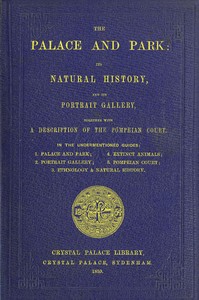
The Palace and Park by Phillips, Forbes, Latham, Owen, Scharf, and Shenton
Always visible content "The Palace and Park" by Forbes, Latham, Owen, Scharf, and Shenton is a guidebook written in the mid-19th century. The work serves as a comprehensive account of the Crystal Palace and its surrounding gardens, offering valuable insights into its natural history and the notable portrait gallery it contains. The text aims to enhance the visitor's experience by providing a thorough understanding of the art, architecture, and exhibitions housed within the palace. The Hidden checkbox to control the toggle Clickable label to show more The extra text that is initially hidden Clickable label to show less opening of the guide details the intention to simplify navigation and exploration of the Crystal Palace and its extensive collections. It introduces various elements such as the refreshment tariffs, official announcements, and event listings relevant to visitors. Notably, it highlights the palace’s architectural significance, historical context, and the efforts made to create an engaging educational environment through exhibits that blend art and science. The authors emphasize accessibility and enjoyment for the public, setting a tone that encourages both leisure and learning. (This is an automatically generated summary.)