Featured Books

Narrative of the Captivity and Restoration of Mrs. Mary Rowlandson by Rowlandson
Always visible content "Narrative of the Captivity and Restoration of Mrs. Mary Rowlandson" by Mary Rowlandson is a memoir published in 1682. During King Philip's War, Rowlandson and her three children were captured by Native Americans after an attack on their Massachusetts settlement. Held for ransom for eleven weeks, she endured injury, separation from her family, and the death of her youngest daughter. Her account of survival, faith, and eventual release became one of America's Hidden checkbox to control the toggle Clickable label to show more The extra text that is initially hidden Clickable label to show less first bestsellers and a foundational example of captivity narratives. (This is an automatically generated summary.)
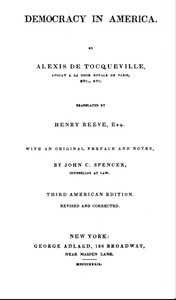
Democracy in America — Volume 1 by Alexis de Tocqueville
Always visible content "Democracy in America — Volume 1" by Alexis de Tocqueville is a classic French work published in 1835. After visiting America in 1831 to study prisons, Tocqueville turned his observations into an examination of democracy and equality in early nineteenth-century American society. He analyzes how religion, politics, and economics shaped the nation's egalitarian culture, while questioning the costs of social mobility and restlessness. The work explores democracy as both an American example Hidden checkbox to control the toggle Clickable label to show more The extra text that is initially hidden Clickable label to show less and a broader revolutionary force transforming the Western world. (This is an automatically generated summary.)
Life on the Mississippi by Mark Twain
Always visible content "Life on the Mississippi" by Mark Twain is a memoir and travel book published in 1883. It recounts Twain's experiences as a young steamboat pilot's apprentice on the Mississippi River before the Civil War, detailing the art of navigating the ever-changing waters. The second half chronicles his return journey decades later, observing how railroads, growing cities, and time have transformed the river and its culture. Blending personal history with tall tales and Hidden checkbox to control the toggle Clickable label to show more The extra text that is initially hidden Clickable label to show less social commentary, Twain captures a vanishing era of American river life. (This is an automatically generated summary.)
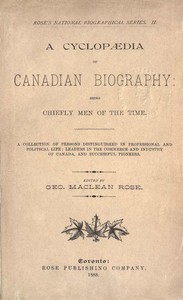
A Cyclopaedia of Canadian Biography: Being Chiefly Men of the Time by Rose
Always visible content "A Cyclopaedia of Canadian Biography: Being Chiefly Men of the Time" by George Maclean Rose is a historical account written in the late 19th century. The work serves as a comprehensive biographical reference, showcasing significant individuals who have made notable contributions to Canada's political, industrial, and educational landscape. The text highlights both well-known figures and unsung heroes whose efforts have shaped the country. The opening of the book introduces the scope and Hidden checkbox to control the toggle Clickable label to show more The extra text that is initially hidden Clickable label to show less intention behind this compilation, emphasizing the need to honor not just politicians but also those in various professions who played a vital role in the development of Canada. The preface reflects on the research and effort put into documenting the lives of these influential Canadians, as the author aims to save their stories for future generations. It lays the groundwork for a collection that spans not only prominent historical figures but also everyday people whose contributions to labor, commerce, and society are integral to the country's history. (This is an automatically generated summary.)
Autobiography of Benjamin Franklin by Benjamin Franklin
Always visible content "Autobiography of Benjamin Franklin" by Benjamin Franklin is an unfinished memoir written between 1771 and 1790. Franklin recounts his journey from a young apprentice fleeing Boston to becoming a successful printer and civic leader in Philadelphia. The work famously details his "Project of arriving at moral Perfection" through thirteen virtues, revealing his struggles and philosophies. Written across four parts over nearly two decades, this influential autobiography ends when Franklin was 52, leaving Hidden checkbox to control the toggle Clickable label to show more The extra text that is initially hidden Clickable label to show less three decades of his remarkable life unrecorded. (This is an automatically generated summary.)
Report of the President's Commission on the Assassination of President John F.…
Always visible content "Report of the President's Commission on the Assassination of President John F. Kennedy" by the Warren Commission is a historical account written in the mid-20th century. The report documents the investigation into the assassination of U.S. President John F. Kennedy, focusing on the events surrounding the shooting and the subsequent apprehension of the accused assassin, Lee Harvey Oswald. The text covers the assassination’s impact on the nation and presents findings regarding Oswald's Hidden checkbox to control the toggle Clickable label to show more The extra text that is initially hidden Clickable label to show less actions and motivations, as well as broader implications for presidential security. The opening of the report outlines the commission's formation following Kennedy's assassination on November 22, 1963, detailing its responsibilities to investigate and present the factual narrative surrounding this tragic event. It describes the immediate chaos following the assassination, the involvement of local authorities, and the swift actions taken by investigative agencies leading to the arrest of Lee Harvey Oswald. Important details about the timeline of events and the evidence collected are laid out, setting the stage for a systematic exploration of the facts leading to the assassination and its aftermath. The commission emphasizes its objective to provide a thorough account while exploring the circumstances that led to such a national tragedy. (This is an automatically generated summary.)

Narrative of the Life of Frederick Douglass, an American Slave by Douglass
Always visible content "Narrative of the Life of Frederick Douglass, an American Slave" by Frederick Douglass is a memoir written in 1845. This powerful firsthand account chronicles Douglass's experiences in bondage and his determination to gain freedom. From his early separation from his mother to brutal physical abuse under various masters, Douglass recounts the dehumanizing realities of slavery. His secret pursuit of literacy becomes a turning point, opening his mind to the possibility of escape Hidden checkbox to control the toggle Clickable label to show more The extra text that is initially hidden Clickable label to show less and fueling his journey toward liberation and self-determination. (This is an automatically generated summary.)

The Souls of Black Folk by W. E. B. Du Bois
Always visible content "The Souls of Black Folk" by W. E. B. Du Bois is a collection of essays published in 1903. This groundbreaking work explores the African-American experience through personal observations and social analysis. Du Bois introduces influential concepts like "double consciousness"—the experience of viewing oneself through both one's own eyes and those of a prejudiced society—and "the veil" that separates black and white Americans. Through essays on education, freedom, and justice, he examines Hidden checkbox to control the toggle Clickable label to show more The extra text that is initially hidden Clickable label to show less the color line dividing races and argues for voting rights, quality education, and equal treatment. (This is an automatically generated summary.)
An Illustrated Dictionary of Words used in Art and Archaeology by John W. Mollett
Always visible content "An Illustrated Dictionary of Words used in Art and Archaeology" by John W. Mollett is a reference work written in the late 19th century. The dictionary aims to elucidate terms frequently encountered in the realms of art and archaeology, ranging from architecture to various art forms, including painting, sculpture, and decorative arts. It serves as an invaluable resource for students, researchers, and enthusiasts of art history and archaeology. At the start of Hidden checkbox to control the toggle Clickable label to show more The extra text that is initially hidden Clickable label to show less this reference, Mollett outlines the origins of the dictionary, revealing that it began as an amended edition of a French work by M. Ernest Bosc. He emphasizes the comprehensive approach taken, incorporating definitions drawn from esteemed authorities across multiple disciplines related to art and archaeology. The opening portion also hints at the extensive inclusion of both illustrations and entries, ensuring that readers have a thorough understanding of the history and terminology related to artistic and archaeological practices. (This is an automatically generated summary.)