Art_culture Books
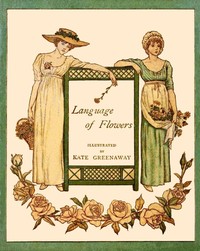
Language of Flowers by Kate Greenaway
Always visible content "Language of Flowers" by Kate Greenaway is a beautifully illustrated collection that blends botany with poetic expression, likely written during the late 19th century. This book serves as a charming exploration of the meanings attributed to various flowers, revealing the language of flowers and their symbolism throughout history. This enchanting work captures the essence of floral communication, offering readers a glimpse into how flowers convey emotions and sentiments. The book presents an Hidden checkbox to control the toggle Clickable label to show more The extra text that is initially hidden Clickable label to show less extensive alphabetical compilation of flowers, each accompanied by a brief description of its symbolic meaning. For example, the rose represents love, while the daisy epitomizes innocence. Interspersed with illustrations, the text creates a vivid tapestry of vivid imagery and sentiment, serving as both a reference for flower meanings and an aesthetic celebration of nature's beauty. Through its careful curation, "Language of Flowers" invites readers to not only appreciate the blooms but also to understand the deeper connections between flora and human emotions. (This is an automatically generated summary.)
What Is Art? by graf Leo Tolstoy
Always visible content "What Is Art?" by graf Leo Tolstoy is a philosophical work completed in 1897. Tolstoy questions the very nature of art, rejecting beauty-based definitions to propose that art is anything communicating emotion—from jokes to church services. Yet his Christian moralism leads him to dismiss celebrated masters like Beethoven, Wagner, and Shakespeare, along with most of his own writings. He condemns the obscurity and artificiality of contemporary art, insisting that true art must Hidden checkbox to control the toggle Clickable label to show more The extra text that is initially hidden Clickable label to show less be accessible to all and serve humanity's moral evolution by evoking brotherhood and love. (This is an automatically generated summary.)
History of Ancient Pottery: Greek, Etruscan, and Roman. Volume 2 (of 2) by Walters et al.
Always visible content "History of Ancient Pottery: Greek, Etruscan, and Roman. Volume 2 (of 2)" by H. B. Walters is a scientific publication written in the early 20th century. This volume specializes in the comprehensive examination of ancient pottery, focusing on the intricacies of Greek, Etruscan, and Roman ceramics. It covers various styles, themes, and techniques, making it a pertinent resource for those interested in ancient art and archaeology. The opening of the volume sets Hidden checkbox to control the toggle Clickable label to show more The extra text that is initially hidden Clickable label to show less the stage for an extensive exploration of the topics presented on Greek vases. It introduces the relationship between vase decoration, mythology, and ancient literature, shedding light on how these artistic expressions not only reflect cultural beliefs but also serve as a significant source of historical knowledge. The content outlines the arrangement of the chapters that delve into various subjects from the Olympian deities to heroic legends and everyday life, establishing a framework for understanding the rich iconography that characterizes ancient pottery. (This is an automatically generated summary.)
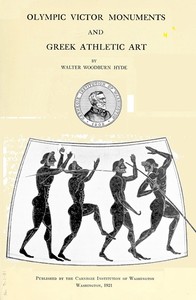
Olympic Victor Monuments and Greek Athletic Art by Walter Woodburn Hyde
Always visible content "Olympic Victor Monuments and Greek Athletic Art" by Walter Woodburn Hyde is a historical account written in the early 20th century. The work delves into the genre of Greek sculpture, focusing specifically on the monuments erected at Olympia and throughout the Greek world to honor victorious athletes of the Olympic games. This examination is framed by an in-depth analysis of the artistic, cultural, and historical contexts surrounding these monuments. At the start Hidden checkbox to control the toggle Clickable label to show more The extra text that is initially hidden Clickable label to show less of the text, Hyde introduces the purpose of his study, which is to reconstruct the various types and poses of surviving remnants of these victor statues, as well as to explore the literary and archaeological sources that inform this research. He emphasizes the challenges present due to the limited number of surviving artifacts and the complexities involved in identifying these monuments, which were often destroyed or lost over time. The opening chapters set the stage for an exploration of early Greek athletics, the significance of victor monuments, and the stylistic and material aspects of the art form, outlining the structure and themes that will be explored in greater detail throughout the book. (This is an automatically generated summary.)
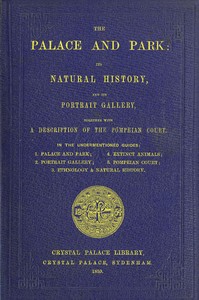
The Palace and Park by Phillips, Forbes, Latham, Owen, Scharf, and Shenton
Always visible content "The Palace and Park" by Forbes, Latham, Owen, Scharf, and Shenton is a guidebook written in the mid-19th century. The work serves as a comprehensive account of the Crystal Palace and its surrounding gardens, offering valuable insights into its natural history and the notable portrait gallery it contains. The text aims to enhance the visitor's experience by providing a thorough understanding of the art, architecture, and exhibitions housed within the palace. The Hidden checkbox to control the toggle Clickable label to show more The extra text that is initially hidden Clickable label to show less opening of the guide details the intention to simplify navigation and exploration of the Crystal Palace and its extensive collections. It introduces various elements such as the refreshment tariffs, official announcements, and event listings relevant to visitors. Notably, it highlights the palace’s architectural significance, historical context, and the efforts made to create an engaging educational environment through exhibits that blend art and science. The authors emphasize accessibility and enjoyment for the public, setting a tone that encourages both leisure and learning. (This is an automatically generated summary.)

The Notebooks of Leonardo Da Vinci — Complete by da Vinci Leonardo
Always visible content "The Notebooks of Leonardo Da Vinci — Complete" by Leonardo da Vinci is a comprehensive collection of writings and sketches that delve into various aspects of art and science, first compiled in the late 19th century. The notebooks reveal Leonardo's insights and observations on topics such as painting techniques, perspective, anatomy, and natural phenomena, reflecting the innovative spirit of the Renaissance era. The content spans approximately thirty years of Leonardo's intellectual labor, Hidden checkbox to control the toggle Clickable label to show more The extra text that is initially hidden Clickable label to show less showcasing his analytical approach to understanding the world. The opening of the work provides an introduction and context for Leonardo's writings, emphasizing the challenges in deciphering his unique handwriting and the chaotic arrangement of his notes. It outlines the author's intent to publish his manuscripts, which cover a wide range of subjects, from theoretical knowledge required for painting to the principles of perspective. Additionally, the preface highlights the confusion present in the manuscripts and the importance of organizing them logically to aid readers. This initial portion sets the stage for an exploration of Leonardo's brilliant mind, inviting readers to engage with the fascinating intersection of art and science he so passionately pursued. (This is an automatically generated summary.)

The Doré Bible Gallery, Complete by Gustave Doré
Always visible content "The Doré Bible Gallery, Complete" by Gustave Doré is a visual art book published during the late 19th century. This comprehensive collection features engravings that depict scenes from the Bible, all crafted by the acclaimed artist Gustave Doré, who is celebrated for his imaginative and intricate illustrations. The volume aims to provide an accessible selection of Doré's work for art lovers and biblical scholars, focusing on key events and figures from scripture. Hidden checkbox to control the toggle Clickable label to show more The extra text that is initially hidden Clickable label to show less The opening of the book details the intention behind compiling this illustrated gallery, highlighting the immense popularity of Doré’s original, more expensive editions. It emphasizes the meticulous selection of illustrations that resonate with significant biblical narratives and the critical appreciation they have garnered over time. Alongside each engraving, there is narrative text that offers brief analyses and context, enriching the viewer's understanding of both the illustrations and the scripture from which they draw inspiration. The beginning establishes Doré’s artistic genius, showcasing his capacity to bring biblical stories to life through striking visual representation. (This is an automatically generated summary.)