Art_culture Books
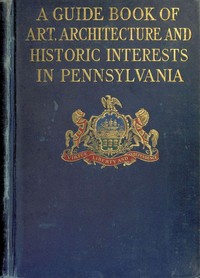
A guide book of art, architecture, and historic interests in Pennsylvania
Always visible content "A Guide Book of Art, Architecture, and Historic Interests in Pennsylvania" edited by A. Margaretta Archambault is a comprehensive guidebook intended for tourists, likely written in the early 20th century. This work highlights various significant artistic and historic sites throughout Pennsylvania, arranged chronologically by counties and detailing the artistic contributions, colonial history, and remarkable landmarks of each area. The opening of the guide provides insightful context regarding the book's purpose and the Hidden checkbox to control the toggle Clickable label to show more The extra text that is initially hidden Clickable label to show less collaborative efforts that went into its creation. It articulates the intention behind documenting art and historical interests by relaying information from local historians and residents, ensuring a thorough account while acknowledging potential discrepancies. Additionally, the beginning section outlines the guide's structure, emphasizing the focus on both early American and local history, setting the stage for a rich exploration of Pennsylvania’s cultural landscape as the reader moves further into the text. (This is an automatically generated summary.)
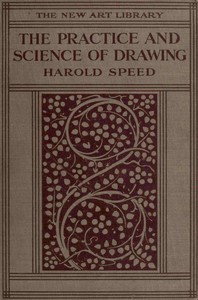
The Practice and Science of Drawing by Harold Speed
Always visible content "The Practice and Science of Drawing" by Harold Speed is an instructional art manual written in the early 20th century. The book aims to provide art students with an understanding of the principles and practices that underpin successful drawing, emphasizing that there are no shortcuts to artistic excellence and that meaningful drawing requires intellectual engagement and individual expression. At the start of the book, Speed addresses common misconceptions about drawing and warns Hidden checkbox to control the toggle Clickable label to show more The extra text that is initially hidden Clickable label to show less against seeking quick, formulaic solutions. He recounts his own learning journey, highlighting the gap between mechanical accuracy in training and true artistic expression as demonstrated in the works of the old masters. He encourages readers to cultivate an understanding of form and emotional significance in their work while avoiding the pitfalls of purely academic approaches that might stifle creativity and individuality. Speed's introduction sets the stage for a deeper exploration of drawing, aiming to stimulate students' appreciation for the artistic process and the various elements that contribute to the creation of meaningful art. (This is an automatically generated summary.)

Anzeiger für Kunde der deutschen Vorzeit (Jg. 26, 1879) by Various
Always visible content "Anzeiger für Kunde der deutschen Vorzeit (Jg. 26, 1879)" by Various is a historical publication written in the late 19th century. This work serves as a periodical that reports and discusses findings related to German cultural and historical studies, particularly through contributions from various scholars and academics. The contributions include various articles, notes, and genealogies that reflect the interests and research within the fields of history, archaeology, and the arts. The opening Hidden checkbox to control the toggle Clickable label to show more The extra text that is initially hidden Clickable label to show less of this work begins with a transcription note, which details the corrections made to the original text from the 1879 volume. Following that, the publication includes information about its editorial board, featuring prominent scholars who guide its contributions. Each issue encompasses diverse topics such as biographical sketches, art history, and insights into German antiquity, presented in a structured format that aims to inform and educate its readership about historical developments and cultural heritage. (This is an automatically generated summary.)
The Lighter Classics in Music by David Ewen
Always visible content "The Lighter Classics in Music" by David Ewen is a comprehensive guide to notable musical works characterized by their lighter themes, written in the early 1960s. This collection features an exploration of compositions by 187 different composers, spanning various genres and styles, aiming to make classical music more accessible and enjoyable. The book likely touches on the significance of these compositions and composers in the context of musical history, highlighting their contributions Hidden checkbox to control the toggle Clickable label to show more The extra text that is initially hidden Clickable label to show less to lighter orchestral and vocal music. The opening of this work introduces several notable composers, beginning with Joseph Achron, who is known for his evocative "Hebrew Melody." This is followed by descriptions of other composers, such as Adolphe-Charles Adam, celebrated for his opéra-comique, and Richard Addinsell, famed for the melodious "Warsaw Concerto." Each segment provides insights into the lives and notable works of these composers, illustrating their impact and the enduring popularity of their lighter compositions in concert repertoires. The text also references the origins and themes of specific pieces, establishing a foundation for the exploration of lighter classical music throughout the remainder of the guide. (This is an automatically generated summary.)
The Stones of Venice, Volume 2 (of 3), by John Ruskin
Always visible content "The Stones of Venice, Volume 2 (of 3)" by John Ruskin is a treatise published in 1853. This volume examines Venetian architecture across Byzantine, Gothic, and Renaissance periods, detailing over eighty churches while providing cultural history. In the famous chapter "The Nature of Gothic," Ruskin interweaves architectural analysis with social commentary, arguing that workers and thinkers should unite rather than remain divided. The work profoundly influenced Gothic Revival architecture and thinkers like Hidden checkbox to control the toggle Clickable label to show more The extra text that is initially hidden Clickable label to show less William Morris and Marcel Proust. (This is an automatically generated summary.)
History of Lace by Mrs. Bury Palliser
Always visible content "History of Lace" by Mrs. Bury Palliser is a detailed historical account written in the early 20th century. The work explores the rich art and craft of lace-making, tracing its evolution through various cultures and time periods, particularly focusing on the techniques, styles, and significance of lace in social and artistic contexts. The opening of the book introduces the significance of needlework as a foundational skill in lace-making, connecting it to various Hidden checkbox to control the toggle Clickable label to show more The extra text that is initially hidden Clickable label to show less historical periods, starting from ancient civilizations such as the Egyptians and moving through to the Middle Ages and beyond. The text discusses how embroidery and decorative techniques were interwoven with social rituals, arts, and even commerce. It highlights the roles of women in the production of lace and intricately links the development of lace to specific historical contexts, alluding to various cultures’ contributions to this delicate craft. (This is an automatically generated summary.)
The London Mercury, Vol. I, Nos. 1-6, November 1919 to April 1920 by Various
Always visible content "The London Mercury, Vol. I, Nos. 1-6, November 1919 to April 1920" by Various is a collection of literary essays, poems, and articles edited during the early 20th century. It provides a platform for a variety of voices exploring contemporary literature, fine arts, music, and drama, reflecting on the cultural landscape of post-World War I Britain. The publication aims to bridge traditional literary criticism and original artistic expression, making it significant for Hidden checkbox to control the toggle Clickable label to show more The extra text that is initially hidden Clickable label to show less readers interested in the evolution of literary discourse during this transformative period. The opening of the volume presents the editorial vision behind "The London Mercury," articulating its commitment to fostering literary culture amidst the challenges of the day. It discusses the necessity for a periodical that combines critical reviews, original works, and essays on the arts, aiming to uphold and promote the values of creativity and culture. It highlights this undertaking as an essential act of resilience and intellect, striving to clarify the role of literature and the arts in a society emerging from crisis. The editor emphasizes the need to maintain a robust literary tradition while embracing innovation, pointing towards a broader ambition to capture the rich conversation about art and literature of the time. (This is an automatically generated summary.)
Goethe's Theory of Colours by Johann Wolfgang von Goethe
Always visible content "Goethe's Theory of Colours" by Johann Wolfgang von Goethe is a book published in German in 1810. The poet challenges Isaac Newton's spectral theory, arguing that color arises from the interaction between light and darkness rather than from light alone. Through extensive observations of colored shadows, refraction, and prisms at varying distances, Goethe presents a phenomenological approach focused on human perception. His work profoundly influenced artists including Turner and Kandinsky, while sparking Hidden checkbox to control the toggle Clickable label to show more The extra text that is initially hidden Clickable label to show less debate among physicists and philosophers about the nature of color itself. (This is an automatically generated summary.)

Lives of the Most Eminent Painters Sculptors and Architects, Vol. 01 (of 10)
Always visible content "Lives of the Most Eminent Painters Sculptors and Architects, Vol. 01 (of 10)" by Giorgio Vasari is a series of artist biographies published in 1550, with a second edition in 1568. This groundbreaking work chronicles the lives of Italian Renaissance painters, sculptors, and architects, establishing the genre of art history writing. Vasari combines technical insights with colorful anecdotes and gossip about artists from Giotto to his own contemporaries. Though criticized for favoring Hidden checkbox to control the toggle Clickable label to show more The extra text that is initially hidden Clickable label to show less Florentine artists and containing factual inaccuracies, it remains the most influential and widely read art history text of its era. (This is an automatically generated summary.)