Sci_tech Books

Encyclopaedia Britannica, 11th Edition, "Armour Plates" to "Arundel, Earls of"
Always visible content "Encyclopaedia Britannica, 11th Edition, 'Armour Plates' to 'Arundel, Earls of'" is a comprehensive reference work written in the early 20th century. This volume is part of a larger encyclopaedic series that covers a wide range of topics, including arts, sciences, and historical accounts. The content likely details the history and technical specifications of various types of armour and weapons, specifically focusing on the evolution of armour plates, both for naval ships and Hidden checkbox to control the toggle Clickable label to show more The extra text that is initially hidden Clickable label to show less military applications. At the start of this volume, the article on "Armour Plates" introduces the early exploration into armoured warships, beginning with designs from Sir William Congreve in 1805 and progressing through various experiments and applications leading up to the Crimean War in 1853. It details significant developments in the field of armouring techniques, including the construction, testing, and materials used for different types of armour, as well as laws of resistance pertinent to their effectiveness against projectiles. The writing also delves into the military and naval necessity for such armament, providing a blend of historical context and technical insight into the evolution of armoured defence systems. (This is an automatically generated summary.)
Highways and Highway Transportation by George R. Chatburn
Always visible content "Highways and Highway Transportation" by George R. Chatburn is a scientific publication written in the early 20th century. This work discusses the historical development and significance of highways in the United States, illustrating their role in transportation and civilization. The author aims to provide readers with a comprehensive overview of highway evolution from primitive trails to modern road systems. The opening of this publication sets the stage by discussing the essential relationship Hidden checkbox to control the toggle Clickable label to show more The extra text that is initially hidden Clickable label to show less between transportation and civilization, arguing that the state of transportation reflects the progress of a society. Chatburn introduces various stages of civilization, detailing how transportation has evolved alongside societal development from early trails used by aboriginal peoples to more organized transportation systems established by settlers. He emphasizes the importance of highways in accommodating the needs of commerce and travel, and lays the groundwork for delving into specific historical developments in later chapters. (This is an automatically generated summary.)

Encyclopaedia Britannica, 11th Edition, "Destructors" to "Diameter" by Various
Always visible content "The Encyclopaedia Britannica, 11th Edition, 'Destructors' to 'Diameter' " by Various is a comprehensive reference work that covers a wide range of topics from the field of arts, sciences, and general information, likely written in the early 20th century. This particular volume appears to focus on concepts and machinery related to waste disposal and disposal technology, as indicated by the detailed discussions on the workings of destructor plants—facilities used for burning refuse Hidden checkbox to control the toggle Clickable label to show more The extra text that is initially hidden Clickable label to show less and waste material efficiently and with minimal environmental impact. The opening portion of this encyclopaedia begins with the technical explanation of "Destructor" technology, emphasizing its design, operational efficiency, cost factors, and environmental considerations. It provides insights into how these waste disposal systems function, including the importance of chimney drafts and combustion temperatures. Additionally, it touches upon economic factors related to waste burning, such as the costs associated with operating various destructor models across different towns, and discusses the utility of residues produced from burning refuse, underscoring the pivotal role of such technology in waste management practices pertinent to urban settings. (This is an automatically generated summary.)
History of merchant shipping and ancient commerce, Volume 4 (of 4) by W. S. Lindsay
Always visible content "History of Merchant Shipping and Ancient Commerce, Volume 4" by W. S. Lindsay is a historical account written in the late 19th century. The book details the evolution of merchant shipping and the development of commerce throughout history, focusing specifically on advancements in maritime technology and navigation methods. It serves as a comprehensive exploration of how marine propulsion systems, particularly steam power, have transformed maritime trade. The opening of this volume presents Hidden checkbox to control the toggle Clickable label to show more The extra text that is initially hidden Clickable label to show less a detailed examination of the earliest modes of propulsion used in maritime vessels, tracing their origins back to ancient civilizations. It describes significant figures in the development of naval technology, including Hero of Alexandria and James Watt, and discusses various experiments and inventions that led to the emergence of steam navigation. Furthermore, Lindsay highlights the connection between historical innovations and modern practices, suggesting that many concepts in usage today have roots in ancient designs and theories of propulsion. (This is an automatically generated summary.)

Jane's All the World's Aircraft. 1913 by Fred T. Jane
Always visible content "Jane's All the World's Aircraft. 1913" by Fred T. Jane is an aviation annual published in 1913. As the founding editor, Jane created what would become the definitive reference for aircraft worldwide. This fourth edition captures aviation at a pivotal moment, documenting the flying machines of the early twentieth century. The publication's meticulous cataloging of aircraft established a standard that would endure through world wars and technological revolutions, making it an essential Hidden checkbox to control the toggle Clickable label to show more The extra text that is initially hidden Clickable label to show less resource for understanding aviation's formative years. (This is an automatically generated summary.)

Edison: His Life and Inventions by Frank Lewis Dyer and Thomas Commerford Martin
Always visible content "Edison: His Life and Inventions" by Frank Lewis Dyer and Thomas Commerford Martin is a historical account likely written in the early 20th century. The narrative focuses on Thomas Alva Edison, one of America's most prolific inventors, and details his remarkable journey through life, marking his contributions to the field of electricity alongside the significant technological advancements occurring during his era. The opening of the book sets the stage by examining the Hidden checkbox to control the toggle Clickable label to show more The extra text that is initially hidden Clickable label to show less socio-political climate of the mid-19th century when Edison was born, highlighting the flourishing age of electricity. It introduces Edison's lineage and early influences, portraying his childhood curiosity and the nurturing yet challenging environment he grew up in. The text stresses Edison's early fascination with science, particularly chemistry and electrical experiments, foreshadowing his future innovations. Through anecdotes, it illustrates Edison's relentless pursuit of knowledge, even at a young age, and hints at the trials he faced that shaped him into the groundbreaking inventor the world would come to admire. This early glimpse into Edison's life establishes the foundation for understanding his extraordinary contributions to modern technology. (This is an automatically generated summary.)
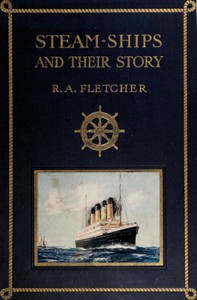
Steam-ships : The story of their development to the present day by R. A. Fletcher
Always visible content "Steam-ships: The Story of Their Development to the Present Day" by R. A. Fletcher is a historical account written in the early 20th century. The book explores the evolution of steam-powered ships and focuses on the innovations that propelled their development over the last century. The author examines the significance of steam-ships in broader historical contexts, particularly their impact on trade and transportation, emphasizing the transition from sailing ships to steam-powered vessels. Hidden checkbox to control the toggle Clickable label to show more The extra text that is initially hidden Clickable label to show less The opening of the work provides a thorough introduction to the history of steam-ships, detailing early mechanical propulsion attempts and the gradual move from sail to steam. Fletcher discusses primitive designs, such as paddle-wheels, and highlights significant individuals and inventions that marked the progress of steam navigation, including notable figures like Robert Fulton and John Fitch, as well as key innovations like the use of screw propellers. Through this exploration, the author sets the stage for a detailed examination of the technological advancements and pivotal moments that shaped steam navigation, revealing the intertwined histories of engineering, commerce, and maritime travel. (This is an automatically generated summary.)
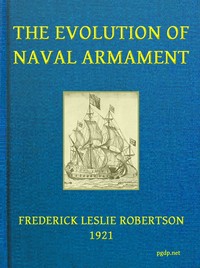
The Evolution of Naval Armament by Frederick Leslie Robertson
Always visible content "The Evolution of Naval Armament" by Frederick Leslie Robertson is a historical account written in the early 20th century. The book delves into the significant advancements in naval technology and armaments, particularly during the 19th century, covering the evolution of ships, guns, and propulsion systems. Robertson, an engineer commander in the Royal Navy, aims to bridge the gap in popular literature concerning naval history, providing insights into the technical aspects and material Hidden checkbox to control the toggle Clickable label to show more The extra text that is initially hidden Clickable label to show less developments that shaped modern naval forces. At the start of the work, the author introduces the theme of naval architecture and the evolution of warships, focusing on the limitations of earlier designs, primarily the sailing ship and its inability to match the maneuverability of oar-driven galleys before the 14th century. He discusses the gradual advancements leading to the incorporation of artillery, driven by innovations like gunpowder and the mariner's compass, which together transformed naval warfare. Robertson emphasizes the historical challenges faced in ship design and construction, highlighting the interplay between naval technology and warfare strategies throughout different eras. (This is an automatically generated summary.)
Waterways and Water Transport in Different Countries by J. Stephen Jeans
Always visible content "Waterways and Water Transport in Different Countries" by J. Stephen Jeans is a historical account written in the late 19th century. This comprehensive work explores the subject of water transport, particularly focusing on artificial waterways like canals. The author addresses the importance of adequate transport facilities to a nation's economic well-being and provides a detailed examination of various canal systems around the world, including well-known projects like the Panama and Suez Canals. Hidden checkbox to control the toggle Clickable label to show more The extra text that is initially hidden Clickable label to show less At the start of the work, the author sets the stage for a discussion on the critical role that effective transportation plays in the prosperity of nations. He emphasizes the historical evolution of waterway construction, discussing the significance of canals from ancient civilizations to modern developments. The opening portion also outlines the author’s intentions to explore specific canals through detailed historical narratives and technical advancements, all while anticipating the future significance of waterways in alleviating transport challenges faced by populated inland regions. (This is an automatically generated summary.)